
Leroy Gordon Cooper Jr.
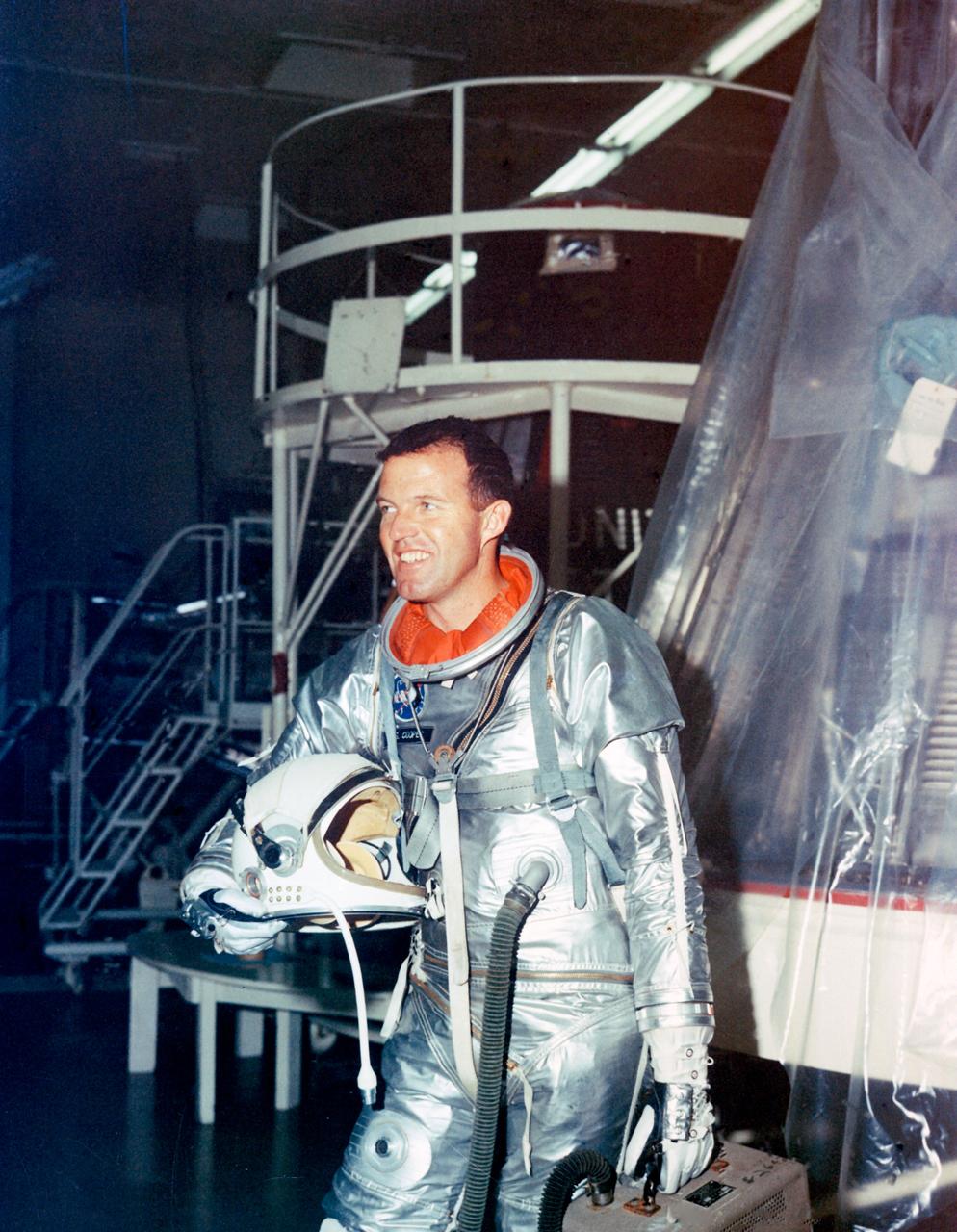
Leroy Gordon Cooper Jr. was an Air Force pilot, test pilot, and one of the original Mercury Seven astronauts. Born in Oklahoma, he grew up around aviation, served in the military, and studied aeronautical engineering before becoming a test pilot. NASA selected him in 1959 as part of the first group of American astronauts, making him one of the public faces of the country's first human spaceflight program.
- Born
- March 6, 1927
- Died
- October 4, 2004
- Birthplace
- Shawnee, Oklahoma,United States
Flights
2
Spacewalks
0
EVA time
N/A
In space
9 days, 9 hours, 14 minutes
Bio
Cooper flew Mercury 9, also known as Faith 7, in 1963. It was the final Mercury mission and the first United States crewed spaceflight to last more than a day. When automatic systems failed late in the mission, Cooper manually controlled using his piloting skill and improvised procedures, ending Mercury with a demonstration of human judgment under pressure.
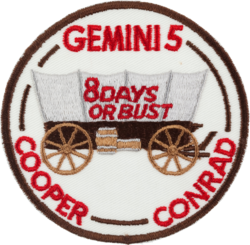
He later commanded Gemini 5 with Pete Conrad, spending eight days in orbit to prove that astronauts and spacecraft could operate for the length of a lunar mission. Gemini 5 also tested fuel cells and endurance procedures needed before Apollo. Cooper's career made him the first person to fly a second orbital space mission, but he did not receive an Apollo flight assignment and retired from NASA in 1970.
Cooper's background fit the broader pattern of the early astronaut corps: technical training, operational discipline, and a career built around difficult work before spaceflight. His formal education included Air Force Institute of Technology (B.S. Aeronautical Engineering, 1956). His service background is recorded as Colonel, United States Air Force. His personal record also sits alongside a family life recorded as two marriages, four children, a reminder that these careers unfolded within ordinary lives as well as national history.