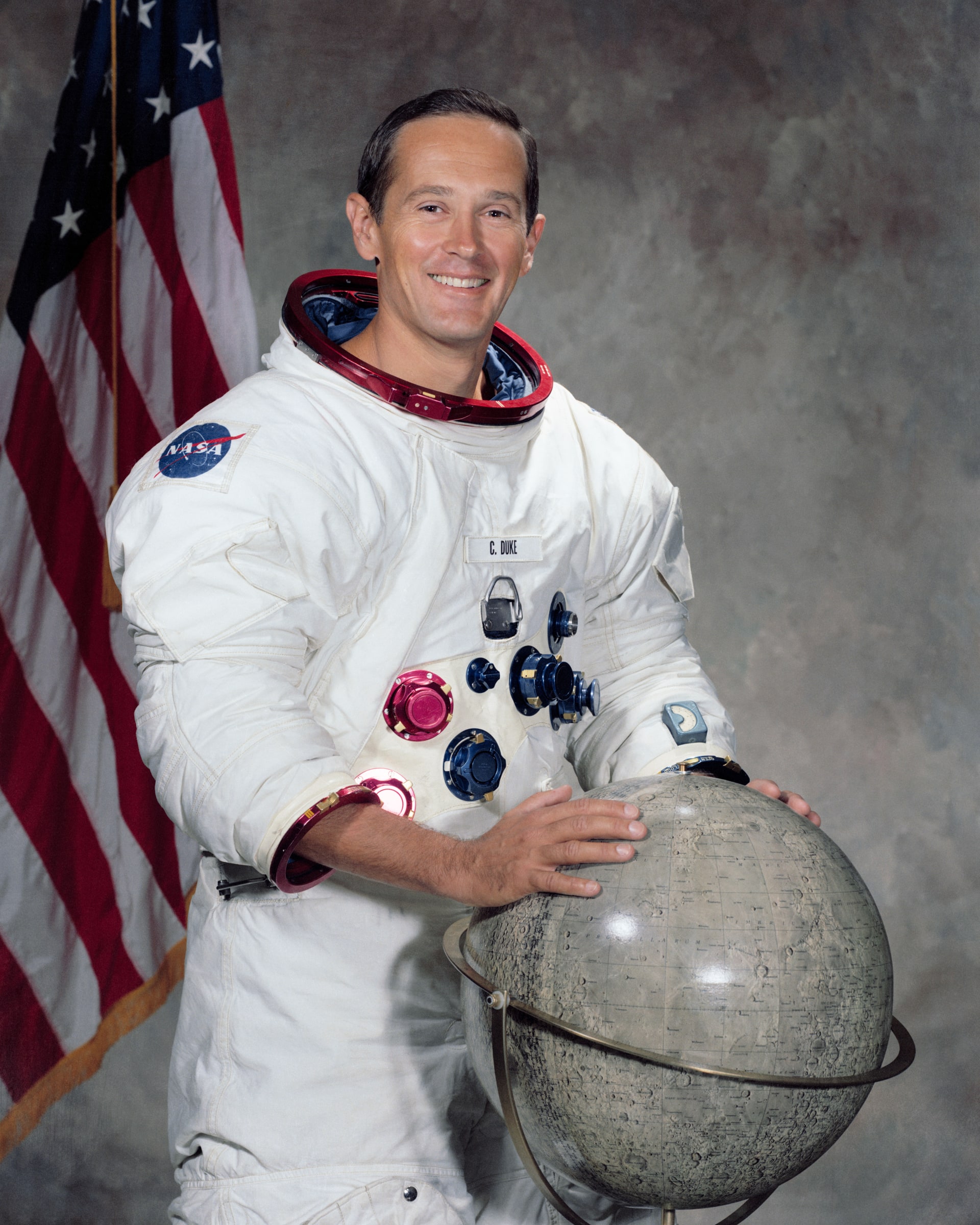
Charles M. Duke Jr.
Charles Moss Duke Jr. was an Air Force officer, test pilot, and Apollo astronaut whose voice and work became part of two lunar landing stories. Born in North Carolina and raised partly in South Carolina, he graduated from the United States Naval Academy, entered the Air Force, and later earned a master's degree in aeronautics and astronautics from MIT. NASA selected him in Astronaut Group 5 in 1966.
- Born
- October 3, 1935
- Died
- N/A
- Birthplace
- Charlotte, North Carolina,United States
Flights
1
Spacewalks
3
EVA time
21 hours, 38 minutes
In space
11 days, 1 hour, 51 minutes
Bio
Duke first became widely known as the communicator for Apollo 11 during the first lunar landing. His calm reply from after Eagle landed helped mark one of the most tense moments in NASA history. He later served on backup crews and trained for lunar surface operations as Apollo moved into more ambitious scientific missions.
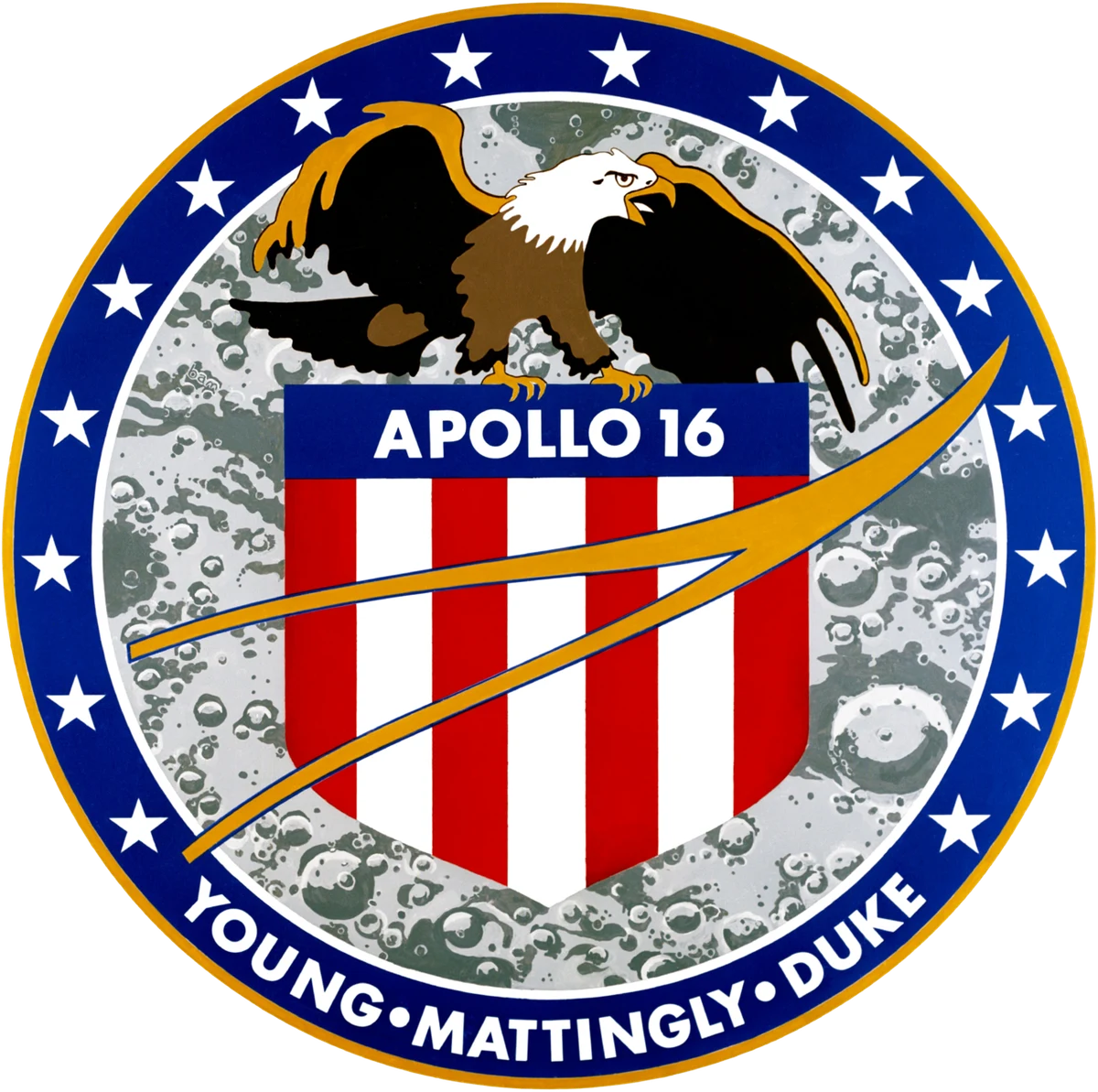
In 1972, Duke flew as Lunar Module Pilot on Apollo 16 with John Young and Ken Mattingly. Young and Duke landed in the Descartes highlands, drove the Lunar Roving Vehicle, collected samples, and completed three lunar surface . At 36, Duke became the youngest person to walk on the Moon. After leaving NASA, he retired from the Air Force Reserve as a brigadier general and became active in business, public speaking, and religious ministry.
Duke's background fit the broader pattern of the early astronaut corps: technical training, operational discipline, and a career built around difficult work before spaceflight. His formal education included United States Naval Academy (B.S. Naval Sciences, 1957), and Massachusetts Institute of Technology (M.S. Aeronautics and Astronautics, 1964). His service background is recorded as Brigadier General, United States Air Force Reserve. His personal record also sits alongside a family life recorded as married, two children, a reminder that these careers unfolded within ordinary lives as well as national history.
Duke's flown space career centered on Apollo 16, where he served as Lunar Module Pilot. Fifth human lunar landing, targeted to the Descartes highlands. The crew used the Lunar Roving Vehicle and returned samples that reshaped understanding of the lunar highlands. The EVA record adds another layer to the mission: About 20 hours, 14 minutes with John Young across three lunar surface EVAs.