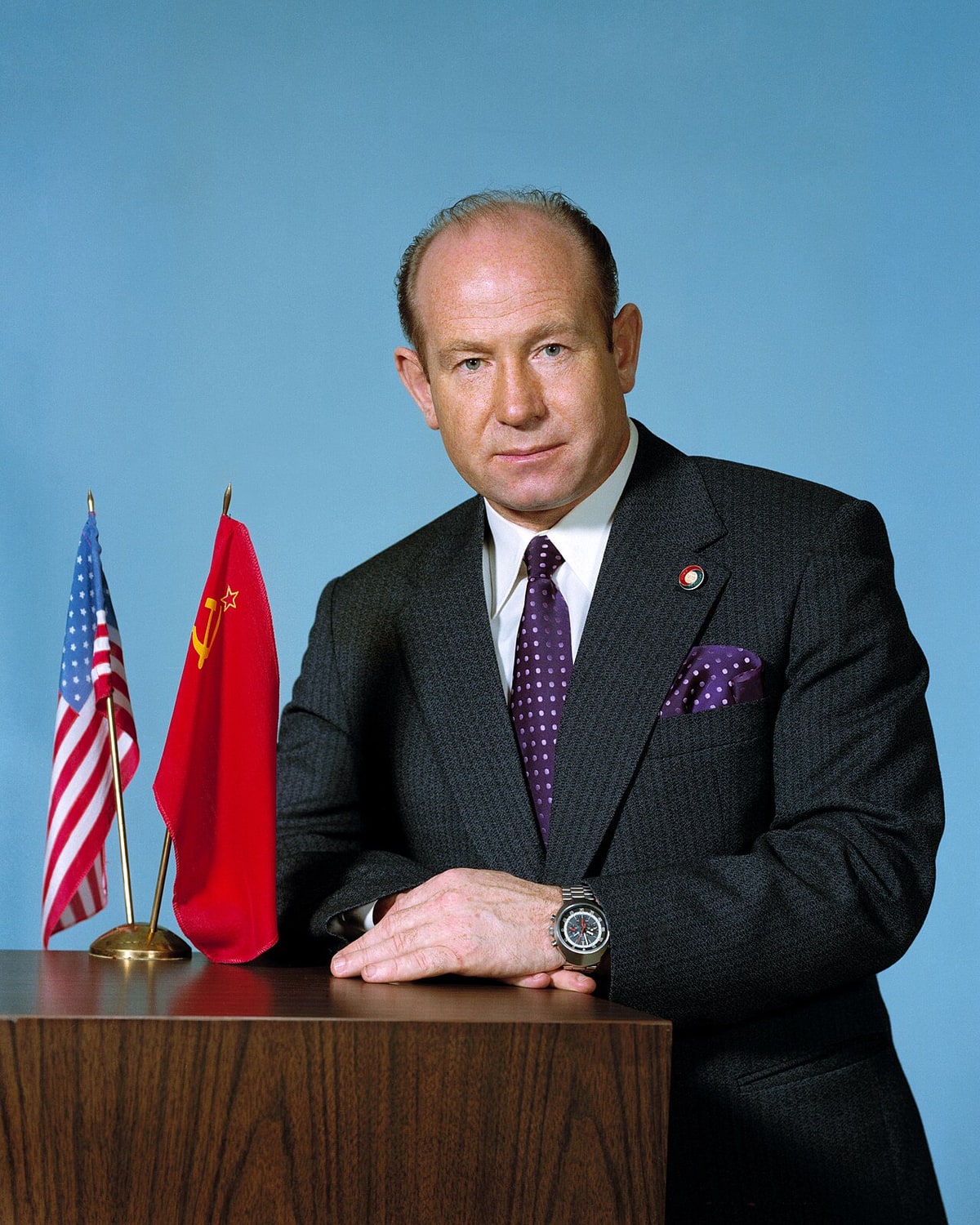
Alexey Leonov
Alexey Arkhipovich Leonov was a Soviet and Russian cosmonaut, Air Force officer, artist, and one of the central figures of early human spaceflight. Born in Siberia, he trained as a military pilot and joined the first Soviet cosmonaut group in 1960. His aviation skill, physical discipline, and artistic eye all became part of the public image he carried through the space age.
- Born
- May 30, 1934
- Died
- October 11, 2019
- Birthplace
- Listvyanka,Russia
Flights
2
Spacewalks
1
EVA time
12 minutes, 9 seconds
In space
7 days, 33 minutes, 3 seconds
Bio
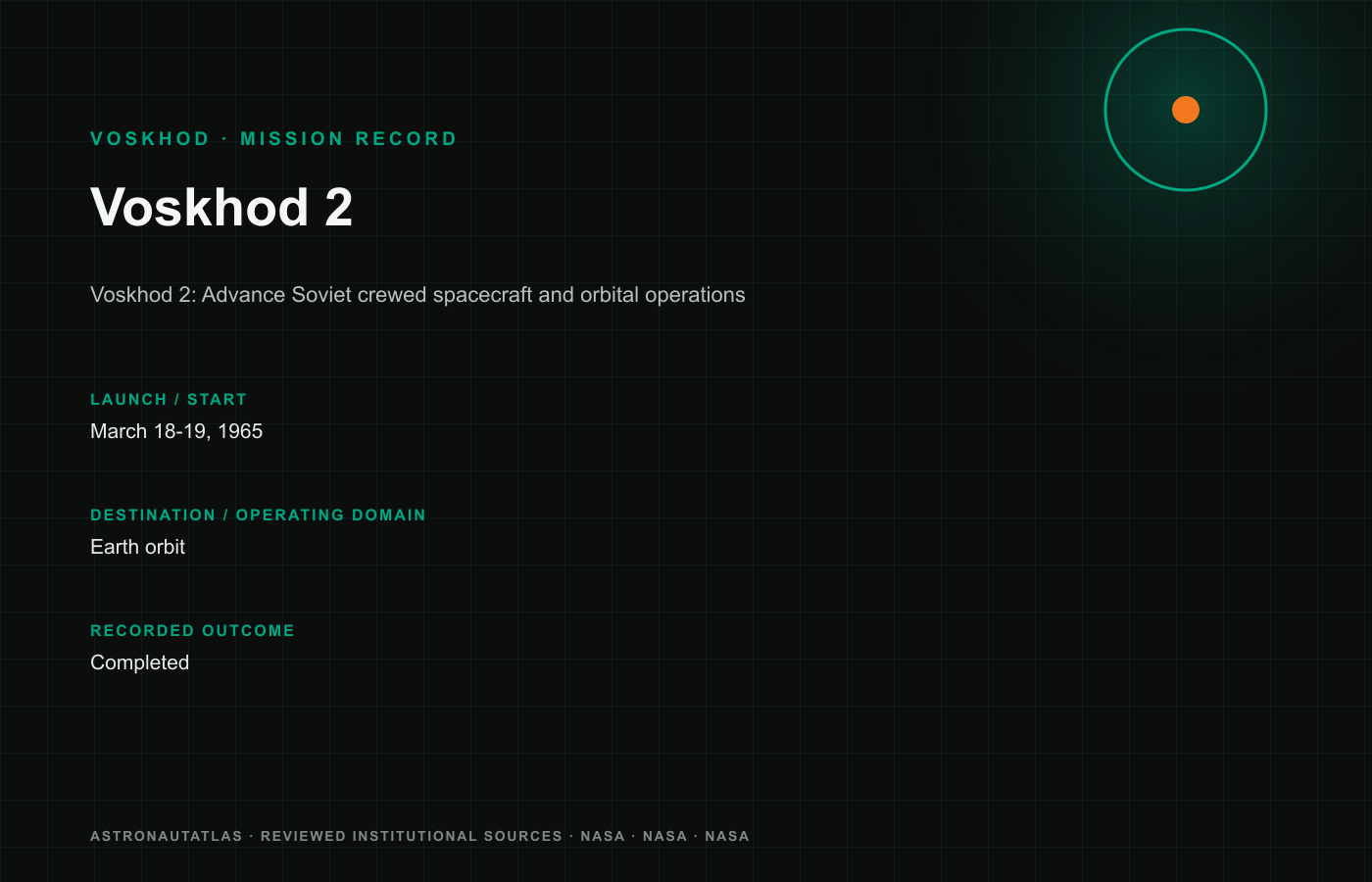
Leonov made history on Voskhod 2 in 1965 when he became the first person to conduct a . The EVA lasted just over twelve minutes, but it was physically dangerous: his suit stiffened in vacuum, making it difficult to re-enter the airlock, and the mission later endured a difficult off-course landing in remote forest. The flight proved that humans could leave a spacecraft and work outside it, even as it exposed how hard EVA operations would be.
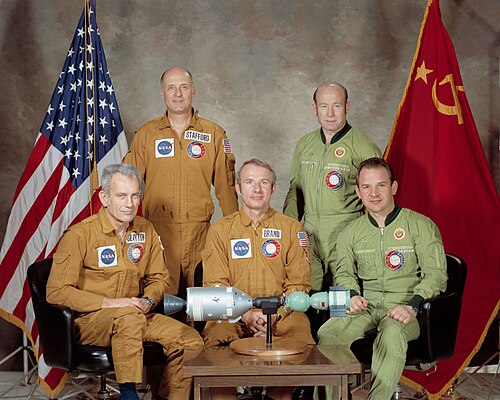
A decade later, Leonov commanded Soyuz 19 during the Apollo-Soyuz Test Project. The mission joined Soviet and American crews in orbit and produced the symbolic handshake in space with the Apollo crew. Leonov also trained for Soviet lunar programs that were later canceled, held senior cosmonaut leadership roles, and became internationally known for paintings and writing that documented space exploration from a participant's point of view.
Leonov's background fit the broader pattern of the early astronaut corps: technical training, operational discipline, and a career built around difficult work before spaceflight. His formal education included Chuguev Higher Air Force Pilots School (Soviet Air Force pilot training, 1957), and Zhukovsky Air Force Engineering Academy (Engineering studies completed during cosmonaut career). His service background is recorded as Major General, Soviet Air Force. His personal record also sits alongside a family life recorded as married, two children, a reminder that these careers unfolded within ordinary lives as well as national history.